
You booked the trip, found the cutest goggles, and now you are staring at a pile of clothes, wondering what actually works on a mountain. Dress wrong and you will sweat through the first run, then freeze on the chairlift.
So, what should you wear skiing? The short answer: three layers. A snug base layer in merino or a synthetic (never cotton), a light fleece or puffy mid layer, and a waterproof ski jacket with ski pants or bibs. Add one pair of thin ski socks, waterproof gloves or mittens, a helmet, and goggles. Skip jeans, cotton hoodies, and long scarves.
This guide covers what to wear under a ski jacket and ski pants, pants vs. bibs vs. one-piece suits, first-time and no-gear hacks, cold-weather and spring skiing, the accessories that matter, and what to wear après-ski and around the ski lodge. Most of it works for snowboarding, too.
Know the rules, now see them styled. Browse our ski outfit ideas for women for 32 looks you can copy.
What to Wear Skiing: Master the Three-Layer System
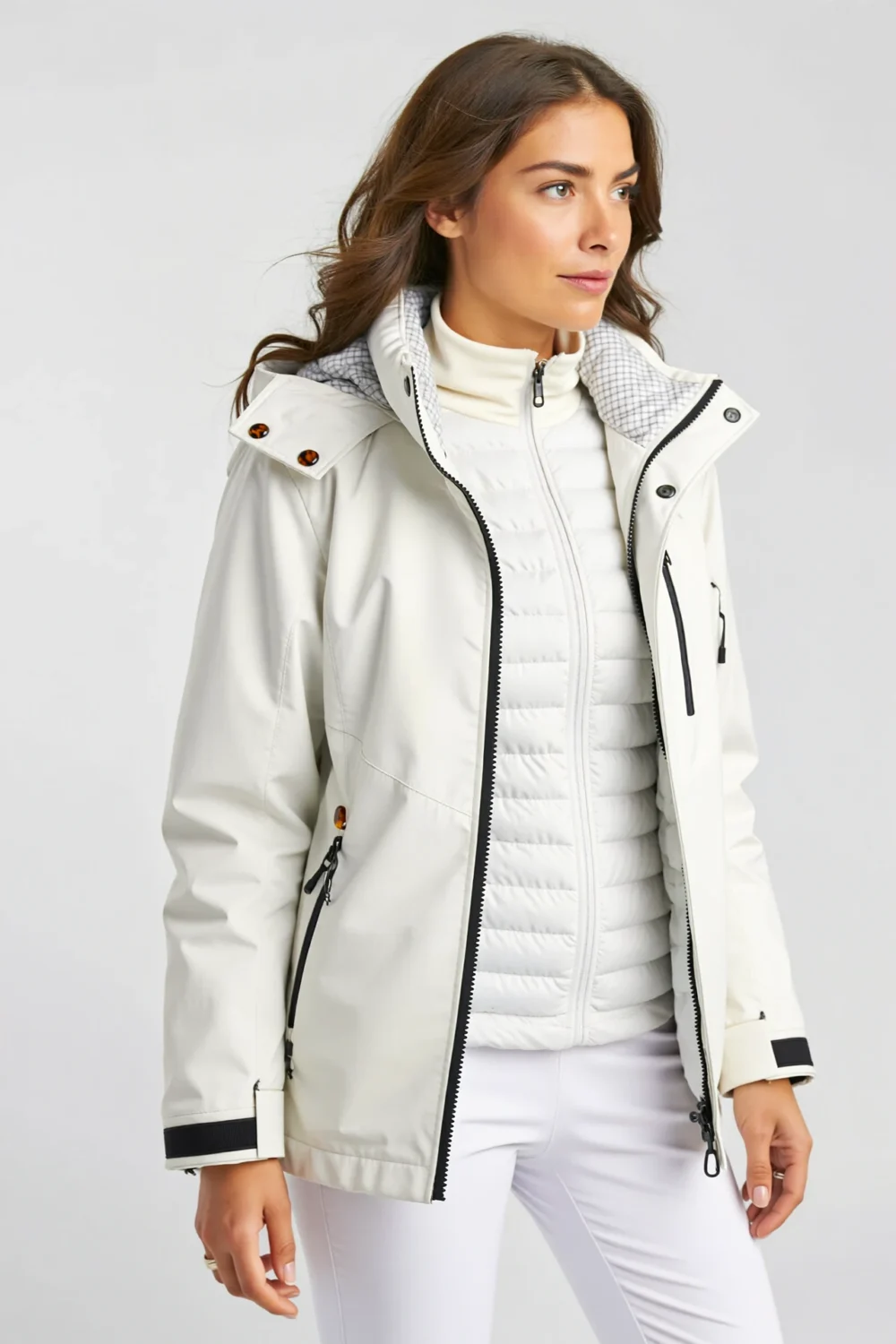
Browse all of our ski outfit ideas for women for 32 warm, slope-ready looks you can copy.
Great ski outfits start with science. The key to looking sleek and staying warm is a smart stack of layers that manage sweat, trap heat, and block wind and snow. Skip the giant marshmallow coat. Three strategic layers work harder and look better.
- Base layer: wicks sweat off your skin so you stay dry.
- Mid layer: traps warm air around your body.
- Shell: blocks wind and snow while letting vapor escape.
This setup keeps you comfy from frosty chairlifts to sunny lunch decks. It also lets you adjust fast. Peel a layer when the sun pops, zip up tight when clouds roll in.
What to Wear Under a Ski Jacket: Base Layers and Mid Layers
Start with a moisture-wicking base top in merino wool or technical synthetics. Merino feels soft, resists odor, and insulates even when damp. Synthetics dry fast, cost less, and are great if you run hot. Choose a snug fit that skims the body so sweat moves away instead of getting trapped. It is the same layering trick we use for hiking in winter.
Style tip: a chic half-zip or turtleneck thermal looks polished when your jacket comes off at lunch. Look for flat seams, thumbholes, and a high collar for neck warmth without bulk.
For your mid layer, think light but mighty. Try a micro-fleece quarter-zip, a grid fleece, or an ultra-thin packable down or synthetic jacket. A vest is perfect if you hate bulky arms. Down is super warm and light. Synthetic insulation keeps warming even if snow sneaks in. Keep the silhouette slim so you feel mobile, not Michelin.
What to Wear Under Ski Pants (Comfort Meets Sleek Contours)
Under snow pants, wear thermal leggings or merino wool tights that wick and fit close. No cotton. For insulated pants, a light to midweight base layer is enough. For uninsulated shells, add a thin fleece pant or heavier thermal on very cold days.
The golden boot-fit rule: nothing bulky goes inside the ski boot except one thin ski sock. Pull base-layer cuffs above the boot top so they do not bunch. This prevents painful pressure points and keeps circulation flowing for warm toes.
Fit hacks:
- Choose high-waisted thermals that do not slip.
- Look for smooth, minimal seams to avoid chafe.
- Seamless, moisture-wicking underwear is your friend.
The Outer Shell: Waterproofing, Windproofing, and Breathability
Your ski jacket and pants are your weather armor. Look for a real waterproof membrane and taped seams. A rating of 10,000 mm or higher and breathable fabric that releases sweat vapor keeps you dry from both snow and effort. Names you will see include Gore-Tex, Dermizax, and brands’ own in-house membranes.
Insulated ski jackets give built-in warmth for resort days and for anyone who runs cold. Hard shell jackets are lighter and rely on your mid layers for heat, which is great for changing weather. Smart features matter: a snow skirt, pit zips, wrist gaiters, water-resistant zippers, and a helmet-compatible hood. Get a clean, comfortable fit with room to layer, but not so boxy that wind sneaks in.
Choosing Your Silhouette: Ski Pants vs. Bibs vs. One-Piece Ski Suits
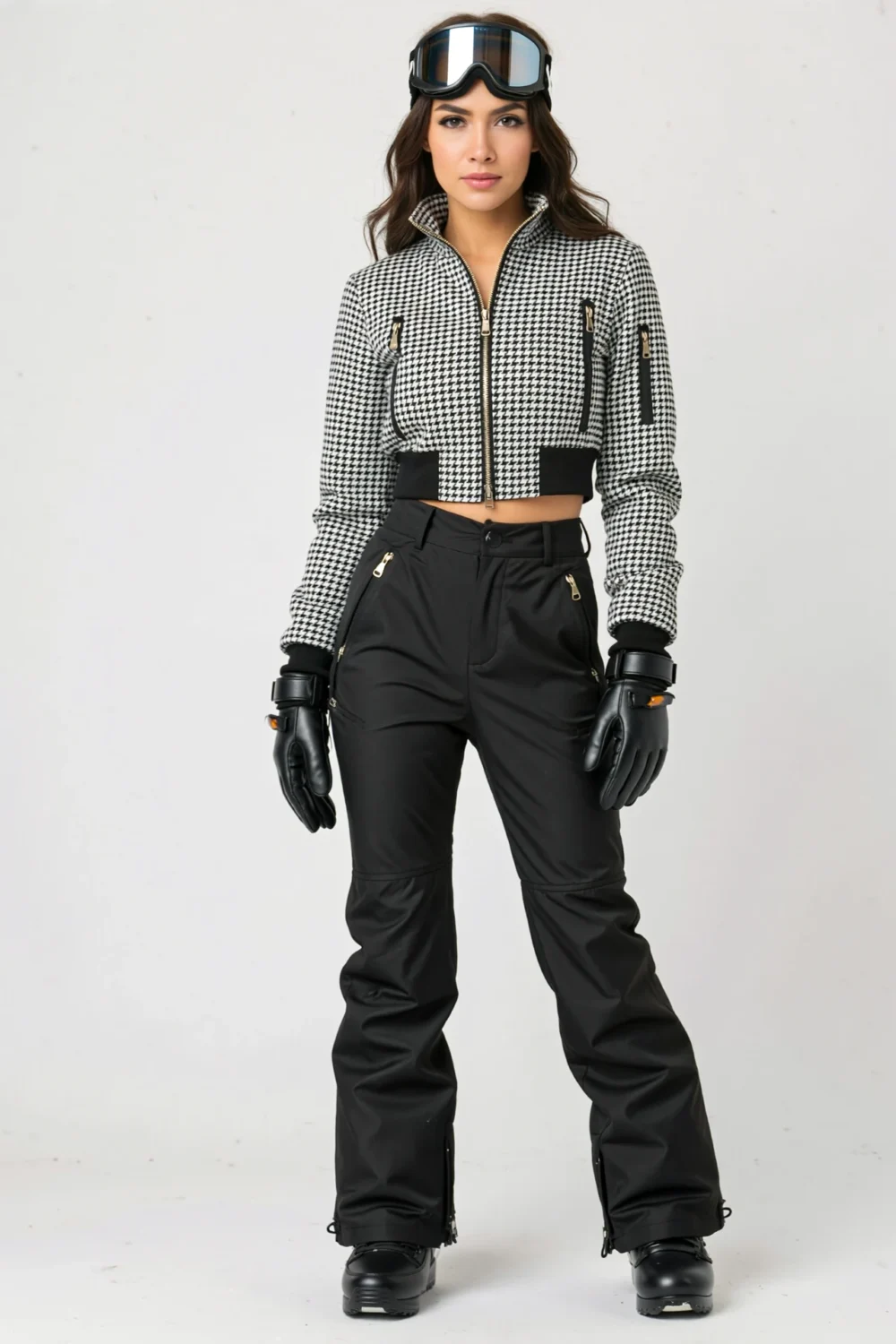
Browse all of our ski outfit ideas for women for more ski pants, bibs, and one-piece suit looks.
Before you plan the cutest ski outfit, choose your outerwear silhouette. Each option changes warmth, coverage, and bathroom logistics, and sets the whole vibe of your ski outfit ideas.
Classic Ski Pants: Tailored, Flattering, and Easy
Ski pants are the most versatile and beginner friendly. High-waisted flared softshell pants give a leg-lengthening, retro-glam look that pairs beautifully with a fitted ski jacket. Relaxed-fit insulated pants offer more room for movement and extra warmth on cold chairlifts.
Look for waterproofing, boot gaiters that seal over ski boots, and scuff guards at the hem. Choose an inseam that just kisses the boot buckle so the hem does not drag. Vent zips help when the sun comes out.
Choose ski pants if:
- You want the fastest lodge bathroom breaks.
- You run warm and prefer lighter layers.
- You love a sleek, tailored silhouette that flatters in photos.
Ski Bibs: The Cool-Girl Armor Against Snow Down Your Back
Bibs are overalls for snow days and they are a game changer for beginners. The high front and back block snow from sneaking into your waistband when you sit, slide, or take a soft tumble. They add cozy core coverage without constant tugging at your waist.
Prioritize adjustable straps, side zips, and women-specific drop-seat designs for easy restroom stops. Thigh vents are key for temperature control. If you have a long torso, look for tall sizing or elastic back panels. Cropped puffers and short shells balance the higher rise for a modern look.
Choose bibs if:
- You want maximum coverage and zero snow down your back.
- You prefer a relaxed, cool-girl silhouette with cargo pockets.
- You are new to skiing and want extra warmth and security.
One-Piece Ski Suits: High-Glam Bond Girl Energy
A one-piece ski suit is the ultimate statement and a stealthy warmth win. With no gap between jacket and pants, wind and snow have nowhere to creep in. A belt defines the waist for a streamlined, unbroken silhouette that photographs like a dream.
Seek 4-way stretch softshell or insulated technical fabric, a two-way front zipper, and vents for breathability. Some designs add a drop seat or interior suspenders so you can wear the top half down at lunch. Layer minimally underneath: sleek merino base and a thin fleece keep the lines clean.
Choose a suit if:
- You crave head-to-toe warmth and a chic, polished look.
- You run cold and ski windy lifts often.
- You are fine managing restroom logistics for major style payoff.
First-Time Skier & No-Gear Hacks: What to Wear If You Don’t Own Ski Clothes
Trying skiing for the first time and do not want to buy a whole new wardrobe? You can still look polished and stay warm with a smart mix of rentals, borrowed pieces, and clever closet substitutes.
What to rent at the mountain shop:
- Skis, poles, and ski boots. This is non-negotiable.
- A helmet. Many rental shops offer them and you should wear one.
- Some resort shops also rent jackets and pants. Call ahead to confirm.
What to borrow from a stylish friend:
- A real ski jacket and snow pants or bibs.
- Goggles that fit your face and helmet.
- Waterproof ski gloves or mittens.
What to buy or use from your closet:
- Base layers under a ski jacket and under ski pants: moisture-wicking workout leggings and a long-sleeve synthetic or merino top. Snug, not tight.
- Mid layer: a fleece quarter-zip or thin packable puffer for insulation.
- One pair of thin, over-the-calf merino ski socks. Not two pairs.
- A fleece or merino neck gaiter and lightweight beanie for après.
No ski pants? Try this safe substitute:
- Layer fleece-lined or thermal leggings as your base.
- Add waterproof, windproof rain pants on top. Make sure the cuffs fit over ski boots and cinch tight so snow stays out.
- Never ski in jeans, cotton sweats, or plain yoga leggings as your outer layer.
No ski jacket? Use a waterproof rain shell:
- Wear your wicking base and a fleece underneath.
- Choose a longer hem and a roomy fit so you can move and zip comfortably.
- A regular puffer can work only on dry, mild days. If it snows, you will get wet.
Accessories on a budget:
- Borrow goggles if you can. Cheap sunglasses are fine for lunch decks, not while skiing in wind or snow.
- If you lack ski gloves, pair liner gloves with waterproof over-mitts. Avoid knit gloves.
Pro tip for saving money:
- Look for online ski apparel rental services that ship jackets, pants, or full snowsuits to your hotel. Resort delivery ski shops will also bring your skis, boots, and helmet to your room. Search “ski clothing rental + your resort” to compare options, and check secondhand sites or local thrift stores for last-minute steals.
Your first-day formula:
- Wicking base top and leggings, fleece mid, waterproof shell on top, waterproof pants over the boots, thin ski socks, helmet, goggles, and gloves. You will be warm, dry, and cute without overspending.
Dressing for the Forecast: Freezing Mid-Winter vs. Sunny Spring Skiing
Mountain weather has moods. Your ski outfit needs to flex with it so you stay warm on icy chairlifts and comfy when the sun turns the slopes to soft slush. Use the same three-layer formula and tweak fabrics, insulation, and vents for the season.
What to Wear Skiing in Cold Weather (Sub-Zero & Mid-Winter)
When the temps dip low and the wind bites, think cozy armor with smart heat-trapping layers.
- Base: heavyweight or midweight merino wool top and bottoms for warmth that still wicks. Skip cotton every time.
- Mid layer: high-loft fleece, a synthetic puffy, or a light down jacket. If you run cold, double-stack a thin fleece plus a vest.
- Outerwear: insulated ski jacket and insulated pants or bibs with a snug powder skirt, wrist gaiters, and no-gape hem over boots. Keep vents zipped.
Cold-weather lifesavers:
- Insulated mittens over liner gloves, not thin five-finger gloves.
- Fleece balaclava or merino neck gaiter under your helmet.
- Air-activated hand and toe warmers for chairlift marathons.
- Low-light goggle lens in rose or yellow for stormy, flat-light days.
- One pair of thin over-the-calf ski socks to keep circulation flowing.
Fit and feel tips:
- Loosen boot buckles slightly on the lift to keep toes warm, then re-buckle to ski.
- Choose bibs for zero drafts up the back and extra core warmth.
What to Wear Spring Skiing (Bluebird Skies & Slushy Runs)
Spring is all about staying dry and ventilated while you bask in that glorious sunshine.
- Base: lightweight synthetic or light merino that wicks fast. A half-zip lets you fine-tune airflow.
- Mid layer: skip it at midday or swap for a thin vest you can stash. Start the morning with a light fleece you can peel.
- Outerwear: uninsulated shell jacket and shell pants with pit zips and thigh vents wide open. Waterproofing is key for wet, slushy snow.
Spring musts:
- Broad-spectrum sunscreen and SPF lip balm. Reapply at lunch.
- Dark or mirrored goggle lens for bright sun. Sunglasses are fine for the deck, not for variable runs.
- Waterproof gloves with light insulation, plus thin liners for chilly starts.
- One pair of thin ski socks, as always.
Pro moves:
- Wear a thin neck gaiter for sun and wind that you can tuck away.
- Pack a pocketable puffy or stashable fleece for late-afternoon shade.
- Choose quick-dry sports bra and underwear so spring melt does not linger.
The Non-Negotiable Accessories (From Helmet to Ski Socks)
Cute jacket, great. But the small stuff decides whether you smile or suffer on the chairlift. Treat these pieces as essential gear, not add-ons, and your ski day instantly levels up.
Helmet: Safety First, But Make It Sleek
- Always wear a ski-certified helmet. Fit should be snug and level, with the front about one to two finger widths above your eyebrows. Shake your head. It should not wobble.
- Look for MIPS or similar rotational impact tech, adjustable vents, and a dial fit system. Removable ear pads are clutch for spring.
- Matte finishes and visor-style helmets are stylish and practical. Skip bulky beanies underneath. A thin balaclava or skull cap is fine only if the fit stays secure.
Goggles: No Forehead Gap, No Fog Drama
- Your goggles should sit flush to your helmet with zero chilly forehead gap. Try on together before you buy or borrow.
- Choose lenses by light: dark or mirrored for sun, rose or yellow for stormy, flat-light days. Anti-fog coatings and ample ventilation are musts.
- Keep vents clear of snow, do not wipe the inside of the lens, and never park goggles on your steamy forehead. Let them air-dry in their soft bag overnight.
Gloves vs. Mittens: Warmth or Dexterity
- Mittens are warmer because fingers share heat. Gloves give better buckle and phone control. If you run cold, pick mittens or add thin liner gloves.
- Non-negotiables: waterproof-breathable membrane, insulated build, and grippy leather palms. A wrist leash saves you from dropping a glove off the lift.
- Cuff choice: gauntlet cuffs go over jacket sleeves for storm days. Under-cuff styles are sleeker and work well in milder weather.
Neck Gaiter or Balaclava: Cozy Face, Safe Chairlift
- Wear a fleece or merino neck gaiter that you can pull over your chin and cheeks. In bitter cold, use a thin balaclava under the helmet.
- Skip long scarves. They can snag on lifts and flap snow into your jacket.
Ski Socks: The Single-Sock Gospel
- One pair of thin, over-the-calf merino ski socks keeps feet warmer by preserving circulation. No cotton. Do not double up.
- Look for seamless toes and light shin padding. Smooth your sock, then pull base-layer cuffs above the boot so only the sock sits inside.
- Cold toes hacks: loosen boot buckles on the lift, keep socks dry, and use toe warmers sparingly on top of your toes, not under your footbed.
What to Wear Après-Ski and to the Ski Lodge
Ski day done, sparkle mode on. Off-slope style usually lands in two camps: straight from the last run to a sunny patio, or a quick shower before fireside cocktails in the lodge. Here are foolproof après-ski outfit formulas so you look polished the second your helmet comes off. Want to see them styled head to toe? Browse our 32 ski outfit ideas.
The Slope-to-Bar Transition
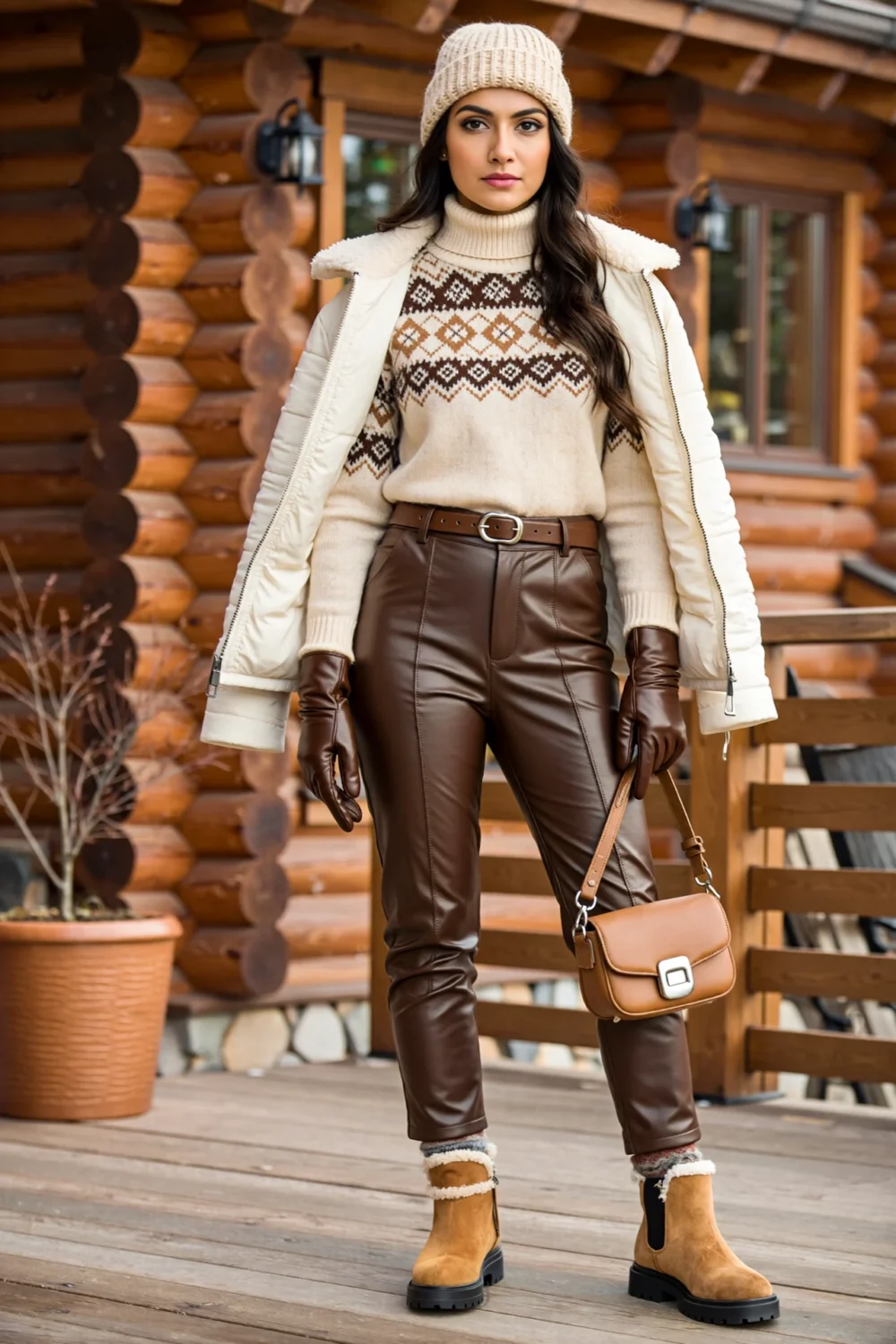
Browse all of our ski outfit ideas for women for cozy après-ski and chalet looks.
You still have your ski pants on, but the vibe shifts from sport to chic.
- Peel off your shell and helmet to reveal a Fair Isle merino turtleneck or a graphic half-zip tucked into flared ski pants or bibs.
- Swap goggles for oversized sunglasses and add a plush faux-fur headband or a sleek beanie.
- Keep your neck gaiter as a soft scarf, add a belt bag or mini crossbody, and pop on tinted lip balm.
- If you run cold, throw on a cropped puffer or a shearling gilet over your base layer for instant après polish.
The Cozy Chalet Lounge
Think elevated loungewear that still looks camera-ready by the fireplace.
- Monochromatic knit sets in cashmere or merino, or thermal leggings with an oversized cable-knit sweater.
- Shearling-lined slippers or packable down booties, chunky socks, and a soft scrunchie or claw clip.
- Delicate huggie earrings and a satin headband for a touch of sparkle.
- If you step outside, add a mid-thigh puffer and waterproof snow boots so your cute ski outfit stays practical.
The Glamorous Mountain Village Night Out
Dressier ski lodge outfits that handle icy sidewalks without sacrificing style.
- Dark tailored denim or faux-leather pants, fleece tights underneath for warmth, and a sleek bodysuit or silk-feel knit.
- Top with a cropped faux-fur coat or a belted shearling jacket, plus leather gloves and a mini crossbody.
- Finish with glossy hair, a red lip, and simple gold hoops. The same formula works for a winter night out in New York City.
What Shoes to Wear Off the Slopes
Once you unbuckle ski boots, switch to traction and insulation.
- Chunky insulated Moon Boots for playful, iconic après-ski energy.
- Waterproof shearling-lined lace-up snow boots with lug soles for icy village cobblestones. Think Sorel-style or similar.
- Weatherproof Chelsea boots with aggressive tread for a sleeker line with denim or leather pants.
- Packable slip-on booties to stash in a day locker for instant comfort at the bar.
Pro tip: choose grippy rubber soles, real waterproofing, and insulation. Skip skinny heels and smooth leather soles on snow and ice.
What NOT to Wear Skiing: The Fashion Faux Pas List
A chic ski outfit starts with what you leave in the closet. If you are wondering what not to wear while skiing, here is the shortlist that saves your day from soggy misery and headache-level regrets.
- Cotton kills. Skip cotton hoodies, tees, sweatpants, denim jeans, and cotton socks. Cotton soaks up sweat and melted snow, then freezes and chills you to the bone.
- Regular underwear in cotton. It stays damp and rubs. Choose moisture-wicking pieces instead so you stay dry and comfy.
- Leggings or yoga pants as your outer layer. They are not windproof or waterproof, so they soak through on the first fall or wet chairlift seat.
- Two pairs of socks or super thick socks. That cuts off circulation and makes toes colder. One thin, over-the-calf merino ski sock only.
- A beanie or pom under your helmet. It ruins the safety fit and gives instant pressure headache. Use a thin balaclava or liner only if the helmet still fits snug.
- Long scarves with tassels. They can snag on lifts and flap snow into your jacket. Wear a fleece or merino neck gaiter instead.
- Knit gloves or fashion mittens without waterproofing. They get wet fast and stay wet. You need insulated, waterproof ski gloves or mittens.
- Street puffers or wool coats. Most are not truly waterproof, lack snow skirts and vents, and get heavy when wet.
- Big hoop earrings, long necklaces, or chunky claw clips. They catch on gaiters and helmet straps. Stick to studs and soft hair ties.
- Sunglasses on the hill when weather changes. Goggles protect from wind, snow, and glare, and actually stay put.
Avoid these and your ski day will be warm, dry, and effortlessly chic.
FAQs
You asked, we answered. Here are quick, no-fuss tips to build cute, warm ski outfits, nail lodge looks, and avoid rookie mistakes without sacrificing style or comfort.
What Do Women Need for Skiing?
You need a moisture-wicking thermal base layer, a warm mid layer like a fleece, and a waterproof ski jacket with snow pants or bibs. Add thin over-the-calf ski socks, waterproof gloves or mittens, a neck gaiter, UV-protective goggles, a ski helmet, and skis, boots, and poles.
What Are the Trendy Ski Wear Trends Right Now?
Think retro-glam with belted one-piece ski suits, high-waisted flared softshell pants, and cropped metallic or high-gloss puffers. Colors split between quiet-lux neutrals and bold brights with 70s color-blocking, chevrons, and plush faux-fur trims.
What Can I Wear Skiing If I Don’t Have Snow Pants?
Layer waterproof rain pants or windproof nylon shell pants over fleece-lined athletic leggings and a thermal base layer. Avoid jeans, cotton sweats, or plain yoga leggings as your outer layer since they soak through instantly.
Can You Wear a Regular Puffer Jacket to Ski?
Only on dry, mild, low-wind days if it is water resistant and you can move freely. Street puffers usually lack powder skirts, pass pockets, and real waterproofing, so snow or falls will leave you wet and cold.
What Are the Cool Girls Wearing to Ski?
Tailored belted suits from Cordova or Perfect Moment, or pastel bibs with cropped technical puffers from Halfdays. Underneath, matching merino half-zip sets that look great the second the jacket comes off.
What Are Some Fashionable Ski Outfits for Women?
Try high-waisted black flared ski pants with a houndstooth or star-print cropped jacket and mirrored goggles. Or go monochrome in winter white or chocolate-brown with a belted one-piece, leather mittens, and a matte visor helmet.
What Not to Wear While Skiing?
Skip jeans, cotton hoodies, cotton socks, and non-waterproof coats. Avoid long scarves, two pairs of socks, and big hoops. Wear real waterproof gloves or mittens, not knit fashion gloves.
What Should Women Wear at a Ski Resort When Not Skiing?
Go for thermal leggings or relaxed straight-leg jeans with a chunky cashmere turtleneck or Fair Isle sweater. Top with a faux-fur or shearling coat, a cozy beanie, and waterproof lug-sole snow boots or Moon Boots.
What Are Some Cool Outfits for Skiing?
Pair relaxed cargo bibs in sage or butter yellow with a color-blocked shell and frameless oversized goggles. Or channel vintage alpine glam in a fitted crimson suit with racing stripes and retro leather gloves.
What Are the Current Ski Clothing Trends?
Runway-meets-resort performance: figure-skimming softshells, modular 3-in-1 jackets, and recycled down or plant-based insulation. Bold printed base layers with half-zips are designed to be seen at lunch and après-ski.
How to Tell If a Jacket Is for Skiing?
Look for an interior powder skirt, a zippered forearm pass pocket, and pit zips. It should list a waterproof rating around 10,000 mm or higher, have taped seams, and a helmet-compatible hood.
What Are Some Good Ski Outfits for Women?
Start with a merino base set, add a lightweight fleece quarter-zip, then lightly insulated waterproof pants and a matching jacket. Choose neutral outerwear and switch up looks with colorful base layers and neck gaiters.
What Should I Wear My First Time Skiing?
Wear moisture-wicking leggings and a long-sleeve synthetic or merino base, a cozy fleece mid, and borrowed or rented waterproof pants and a ski jacket. Add thin ski socks, waterproof gloves, a neck warmer, and rented helmet and goggles.
What Are Some Good Women’s Snow Outfits?
For tubing or village strolls, try fleece-lined water-resistant leggings, a thermal turtleneck, and a mid-thigh down parka. Add waterproof shearling-lined boots, a knit beanie, and insulated leather mittens for warmth and photos. Heading to the rink instead? Read our guide on what to wear ice skating.
What Is a Women-Owned Ski Brand?
Halfdays, co-founded by Olympian Kiley McKinnon with Ariana Ferwerda and Karelle Golda, makes chic, size-inclusive skiwear. Also look at Cordova, Wild Rye, Kari Traa, and Skea for women-led alpine style.
Can I Wear the Same Outfit for Snowboarding?
Yes. The same three layers work: a wicking base, a warm mid layer, and a waterproof shell. Snowboarders sit in the snow more often, so many pick roomier pants or bibs with a reinforced seat and knees, plus gloves or mittens with long gauntlet cuffs. Swap ski boots for snowboard boots and keep one pair of thin socks.
What Should I Wear Skiing in 20, 30, or 40 Degree Weather?
Around 40 degrees, wear a light base layer, a thin vest or no mid layer, and a shell with the vents open. Around 30 degrees, add a fleece or light puffy mid layer and insulated gloves. At 20 degrees and below, switch to a midweight or heavyweight merino base, a warm mid layer, an insulated jacket with insulated pants or bibs, mittens, and a neck gaiter or balaclava. Wind and long chairlift rides make it feel colder, so pack one extra layer.
Conclusion: Ready to Carve, Pose, and Clink Glasses
You are officially equipped to dress like you ski every weekend, even if it is your first time. Warm and dry means you can focus on carving turns, laughing on chairlifts, and nailing the photos.
Quick checklist before you zip up:
- Wicking base top and bottoms
- Cozy mid layer you can peel
- Waterproof ski jacket and pants or bibs
- One pair of thin over-the-calf ski socks
- Waterproof gloves or mittens with a wrist leash
- Helmet and anti-fog goggles that fit together
- Neck gaiter, sunscreen, and SPF lip balm
- Base-layer cuffs above boot tops, lift pass zipped safely
- Hand and toe warmers for icy days
Invest in great base layers and socks first. Rent or borrow the heavy hitters like boots, helmet, goggles, jacket, and pants while you test the sport. Then lean into après-ski style, because the best ski trip outfits work from first chair to last toast. Need a starting point? Pick a look from our ski outfit ideas for women and copy it head to toe.
Leave a Reply